Wear in cement production
Cement production moves millions of tonnes of hard, fine material — limestone, raw meal, coke and ground clinker — in continuous flow through mills, separators, cyclones and pneumatic conveying ducts. That combination of abrasive particles, velocity and temperature quickly wears out metal plates and alloys, deforming internal profiles, punching holes in elbows and forcing repeated maintenance.
Technical alumina resists exactly where this process attacks: with hardness above 1,300 HV and stability at high service temperatures, a wear-resistant ceramic lining multiplies component life by up to 10× versus Ni-Hard, keeping geometry and separation efficiency.
Where ceramics are applied in a cement plant
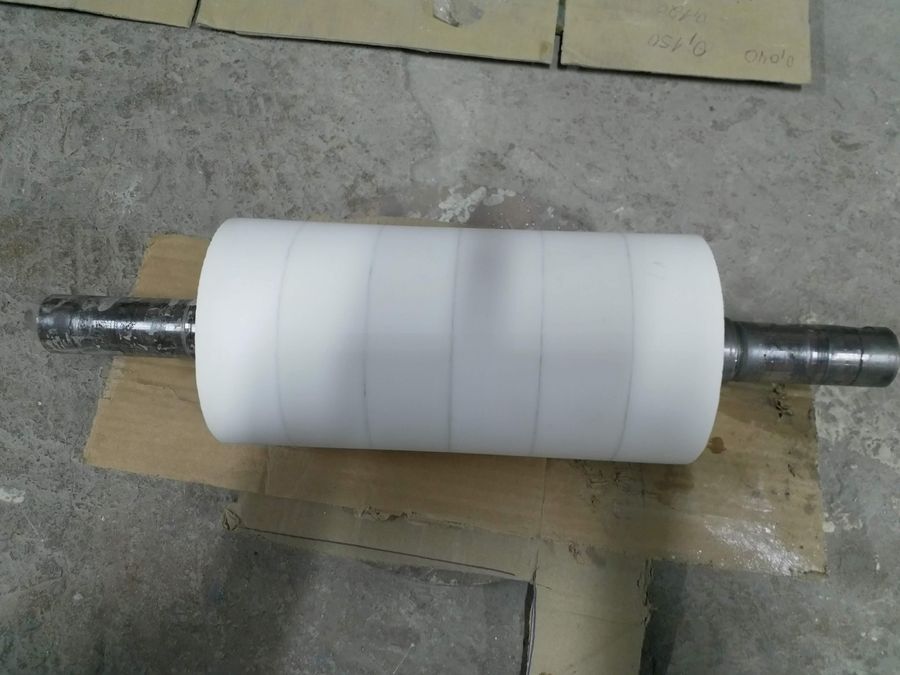
- Grinding — ceramic rollers and cylinders, plus lining of raw-meal and coke sliding points.
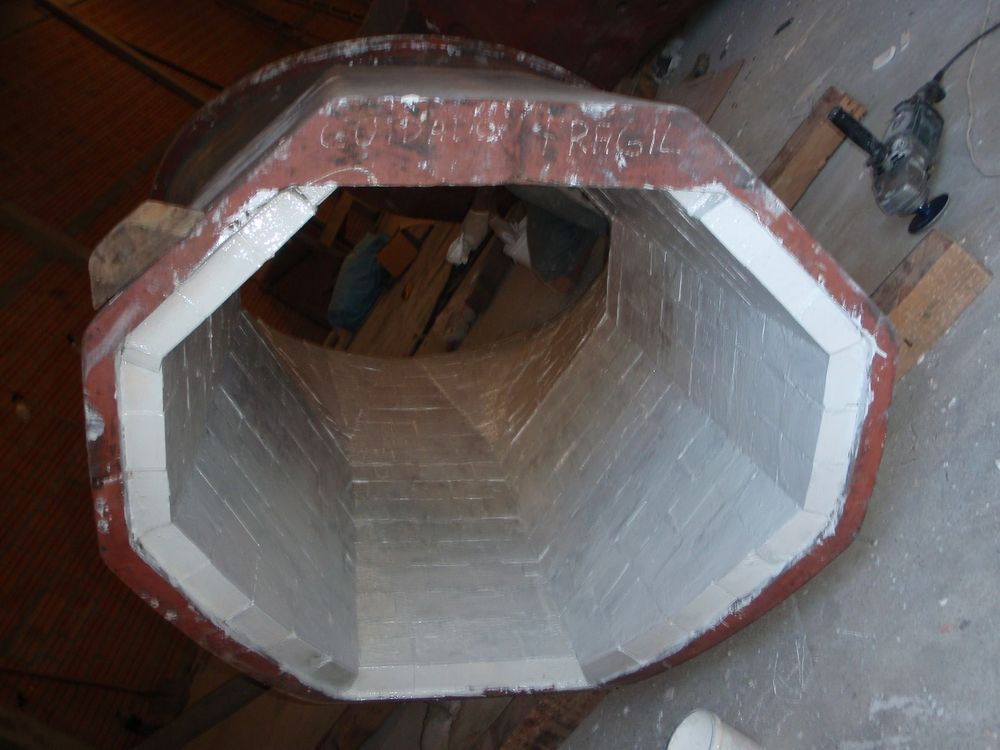
- Separation — separation cyclones in raw-meal and coke grinding, with geometry preserved throughout their service life.
- Pneumatic conveying — lined pipes, elbows and branches, where direction changes concentrate wear.
- Ducts and chutes — full internal protection with ceramic tiles and shaped parts.
Components we supply
- Lined cyclones — body, cone and feed chamber in CT CEDUR.
- Ceramic-lined pipes and elbows — pneumatic conveying of raw meal, coke and cement, pipe and flange in matching sizes.
- Grinding rollers — high-hardness ceramic rollers and cylinders for continuous grinding.
- Custom linings — ducts, chutes, valves and flow splitters.
Votorantim is among the major industrial groups running CETARCH ceramic components.
Material: CT CEDUR alumina
Cement components use the CT CEDUR line — technical alumina sintered above 1,600 °C, virtually free of glassy phase, retaining mechanical properties at high service temperatures. For pure abrasion, CT CEDUR 94HH; for points with impact, 96HH; engineering specifies the formulation for each point of the process.
FAQFrequently asked questions
Can ceramic withstand cement process temperatures?
Yes. CT CEDUR alumina is sintered above 1,600 °C and retains its mechanical properties at high service temperatures, with no deformation — far above the typical conditions of grinding, separation and pneumatic conveying in a cement plant.
Can already-installed ducts and elbows be lined?
Yes. The lining is designed from the drawing or measurements of the existing equipment — ducts, elbows, cyclones and chutes receive custom-made ceramic parts, without changing the process or reducing flow areas.
Where do ceramics pay off most in a cement plant?
At the points of recurring replacement: pneumatic conveying elbows, separation cyclones and grinding rollers. These are the regions where abrasion concentrates wear and where the up-to-10× longer ceramic life eliminates repeated shutdowns.