What wear-resistant ceramic lining is
Wear-resistant ceramic lining is the application of technical ceramic parts — tiles, segments and moulded alumina components — on the equipment surfaces exposed to abrasion. Instead of letting the abrasive flow consume the metal, the ceramic, at 9 Mohs and over 1,300 HV, takes the contact with slurries, powders, ash and grain.
Wear alloys such as Ni-Hard and hardened steel plate lose thickness continuously at the worst attack points: bends, jet impact zones, turbulence regions. The result is an expensive cycle of inspection, repair and replacement. Ceramic breaks that cycle: the surface barely wears and the equipment keeps its geometry between shutdowns.
Forms of supply
The lining is engineered part by part for your equipment, in the forms industry uses most:
- Pipe lining — lined pipes, elbows and flanges for pneumatic and hydraulic conveying of abrasive materials.
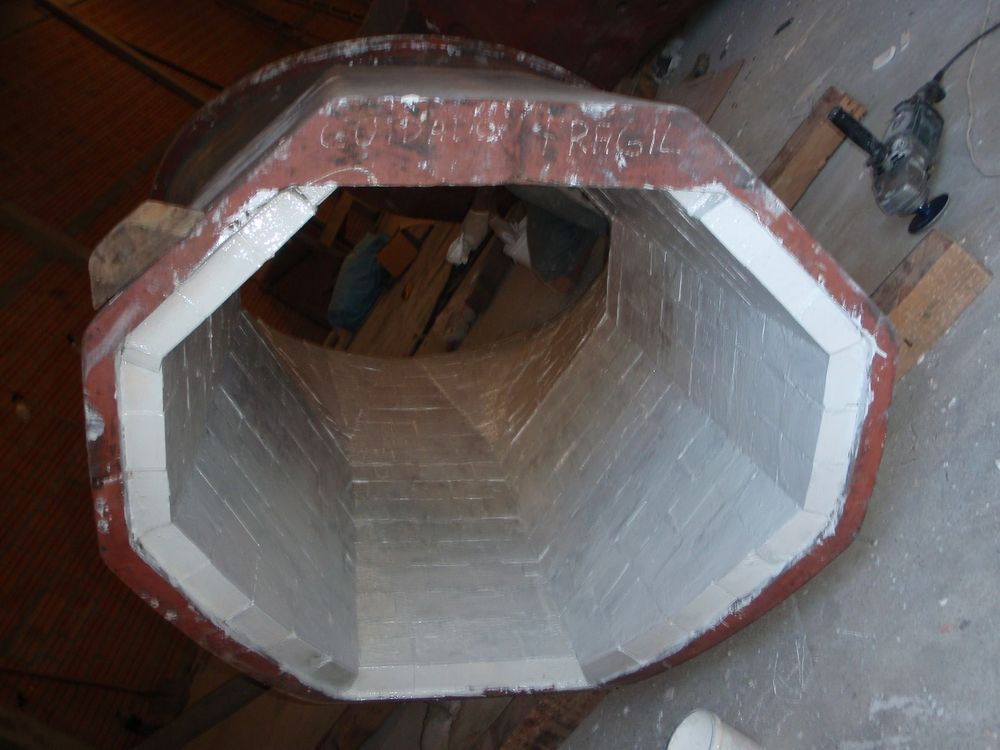
- Chutes and ducts — internal protection of chutes, launders and rectangular ducts, including 100% ceramic builds.
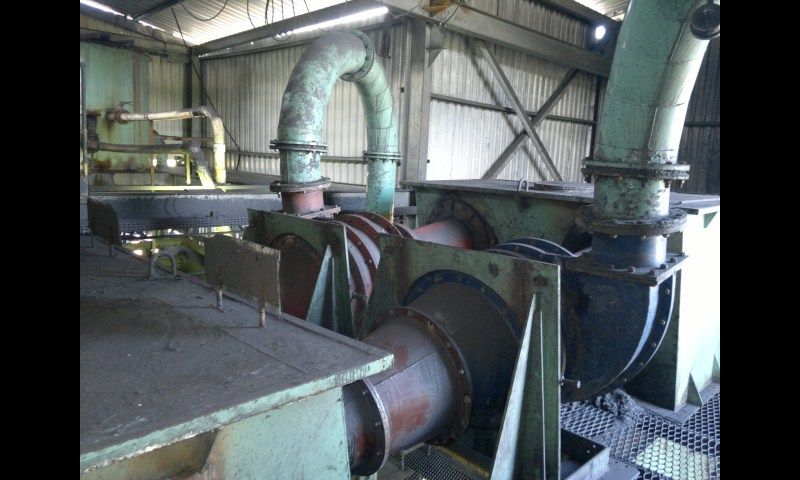
- Fan blades — lining of blades and casings of fans handling particle-laden gases.
- Ceramic-in-rubber — ceramic segments vulcanized into rubber for points that combine abrasion and impact.
- Burner blocks — ceramic protection in high-temperature regions.
- Special fillers and linings — custom solutions developed by engineering for your wear point.
Material: CT CEDUR alumina
Every CETARCH lining uses the CT CEDUR technical alumina line — 90% to 99.7% Al₂O₃, sintered above 1,600 °C, virtually free of glassy phase. For pure abrasion, CT CEDUR 94HH; for severe abrasion plus impact, 96HH; for chemical attack or thin, complex parts, the high-purity 99HH. Doped-zirconia and rare-earth compositions are available on demand.
Where ceramic lining is applied
- Mining — slurry, crushing and classification: piping, cyclones, pumps and chutes.
- Cement — grinding, pneumatic conveying and separation of raw meal, clinker and coke.
- Steel — sinter, pelletizing and particulate handling.
- Energy — thermal power plants: pulverized coal, fly ash and bottom ash.
- Chemical, pulp & paper, agribusiness — corrosive fluids, slurries and abrasive grain.
How we develop your lining
- Diagnosis — analysis of the wear point, the processed material, the flow and the operating conditions.
- Engineering — part geometry and CT CEDUR formulation defined for the challenge.
- Manufacturing — forming, sintering in in-house kilns and precision grinding.
- Application — delivery, installation support and field performance follow-up.
Frequently asked questions about wear-resistant lining
How is the ceramic lining fixed to the equipment?
It depends on the application: parts and segments fitted onto the existing metal structure, ceramic vulcanized into rubber for impact points, and solid components that replace the original part in matching sizes. The fixing method is defined by engineering at the design stage, together with the geometry.
How long does a wear-resistant ceramic lining last?
The field benchmark is up to 10 times the service life obtained with Ni-Hard or hardened steel at the same point. Beyond lasting longer, the ceramic keeps the equipment geometry — preserving process efficiency between planned shutdowns.
What about impact — won't the ceramic crack?
For abrasion combined with severe impact we use the CT CEDUR 96HH formulation, developed for that duty, and ceramic-in-rubber — ceramic segments vulcanized into rubber, which absorbs the impact while the ceramic resists the abrasion.
Does it work on equipment already in operation?
Yes. The lining is custom-made from the equipment drawing or a reference part — there is no need to replace the equipment, only to protect the wear points.
Does the lining change the process or reduce flow?
No. The parts match the original equipment geometry, with no reduction of flow areas. The low roughness of the ceramic also cuts friction and material build-up, helping the flow.