Why line slurry pumps with ceramic
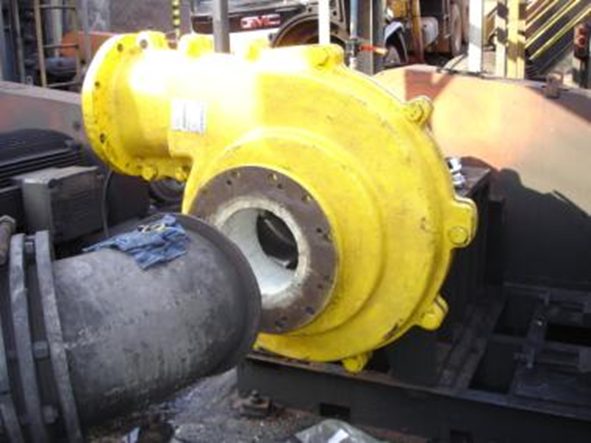
The slurry pump is the heart of the circuit — and the component that suffers most from abrasion. Slurry enters at high velocity, spins inside the volute and is pressed against the casing: impeller and volute lose material continuously, hydraulic efficiency drops and maintenance becomes routine. Every metal-part replacement means downtime, spares and labour.
A wear-resistant ceramic lining changes that equation: CT CEDUR alumina (9 Mohs, above 1,300 HV) barely yields to slurry erosion, keeps the hydraulic geometry of the pump and multiplies the interval between maintenance stops.
What we supply
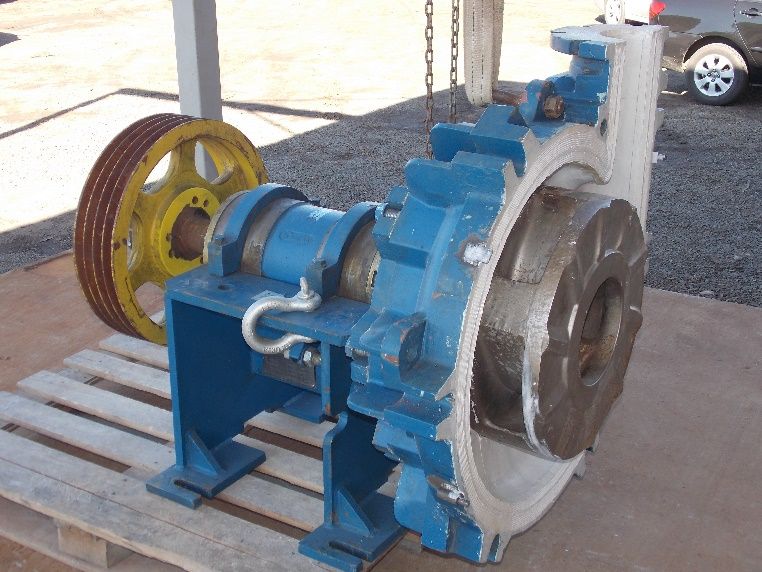
- Casings lined with solid ceramic — the volute protected by one-piece ceramic parts, with no weak points.
- Internal components — linings that protect impeller and volute against slurry erosion.
- Ceramic bushings and sleeves — for pump shafts and bearings, at the points of continuous friction.
- Custom parts — made from the original part or drawing, for pumps from any manufacturer.
Material: CT CEDUR alumina
CETARCH pumps are lined with the CT CEDUR line — technical alumina sintered above 1,600 °C, virtually free of glassy phase. For abrasive slurry, the most used formulations are CT CEDUR 94HH (high abrasion) and 96HH (abrasion + impact); for chemically aggressive slurries, the high-purity 99HH. At friction points, ceramic bushings complete the set.
Where it is applied
- Mining — pumping of slurry, tailings and concentrate.
- Steel — sinter and pelletizing slurries.
- Pulp & paper, chemical and energy — corrosive slurries and solids-laden fluids.
How we develop your pump
- Diagnosis — analysis of the wear point, the pumped slurry and the operating conditions.
- Engineering — geometry and ceramic formulation defined from the original part or the pump drawing.
- Manufacturing — forming, sintering in in-house kilns and precision grinding.
- Application — delivery, installation support and field performance follow-up.
Frequently asked questions
Do you line pumps from any manufacturer?
Yes. The project starts from the original part or the pump drawing, and the ceramic is custom-made for your existing equipment — no need to replace the pump, only to protect the components that suffer erosion.
Does the lining change the hydraulic performance of the pump?
No — the ceramic parts match the original equipment geometry. Unlike metal, which loses profile as it wears, ceramic keeps the design hydraulic geometry throughout its service life, and the low surface roughness further reduces friction with the slurry.
Which ceramic formulation should my pump use?
It depends on the slurry: for pure abrasion, CT CEDUR 94HH; with impact from larger particles, 96HH; with chemical attack or high-purity requirements, 99HH. CETARCH engineering specifies the formulation from an analysis of your process.