
Why use ceramic orifice plates
An orifice plate only works while the bore keeps its design diameter. In abrasive flow, the calibrated bore of a metal plate erodes and grows day after day — and the restriction (or the measurement) silently loses calibration: flow drifts off the setpoint, pressure changes and the process goes out of control without anyone seeing inside the part.
In a ceramic plate that drift virtually does not exist: the hardness of CT CEDUR alumina (9 Mohs, above 1,300 HV) preserves the calibrated bore throughout its service life, keeping flow and pressure at the design point between shutdowns.
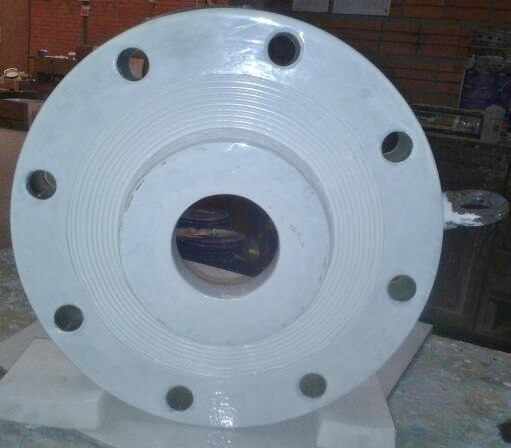
What we supply
- Restriction orifice plates — precise flow and pressure control in abrasive lines.
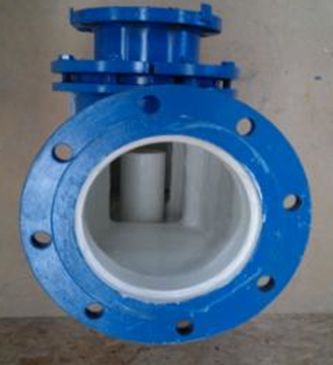
- Orifice valves — the control element in ceramic, with no bore erosion.
- Lined butterfly valves — built to any size the project requires (e.g. 14¨ inlet / 8¨ outlet).
- Lined splitters and distributors — flow division with no weak points at the joints.
- Injector and rotary valves — dosing and directing highly abrasive flows.
Material: CT CEDUR alumina
CETARCH plates and valves are made with the CT CEDUR line — technical alumina sintered above 1,600 °C, virtually free of glassy phase, ground to tight tolerances. For pure abrasion, CT CEDUR 94HH; with impact, 96HH; for chemically aggressive fluids or fine bore geometries, the high-purity 99HH.
Where it is applied
- Mining — restriction and flow control in slurry lines.
- Cement — dosing and control in pneumatic conveying of abrasive powders.
- Chemical, energy and pulp & paper — control of corrosive and solids-laden fluids.
How we develop your plate
- Diagnosis — analysis of the fluid, the design flow and pressure, and the wear point.
- Engineering — calibrated bore, geometry and ceramic formulation defined for your process.
- Manufacturing — forming, sintering in in-house kilns and precision grinding of the bore.
- Application — delivery, installation support and field performance follow-up.
Frequently asked questions
Why does a ceramic plate keep its calibration?
Because the bore barely erodes: at 9 Mohs and over 1,300 HV, alumina withstands the abrasive flow that wears out the bore of a metal plate. The calibrated diameter stays at its design value — and with it, the flow and pressure of the process.
Do you manufacture to my design?
Yes — manufacturing is 100% custom, from your drawing or a reference part, in any size the project requires (for example, valves with 14¨ inlet and 8¨ outlet). The orifice bore is ground to tight tolerances.
Which ceramic formulation should my plate use?
For pure abrasion, CT CEDUR 94HH; with impact from larger particles, 96HH; with chemical attack or fine bore geometries, the high-purity 99HH. CETARCH engineering specifies the formulation from an analysis of your flow.