Why line valves with ceramic
The valve is where an abrasive flow is forced to accelerate, change direction or throttle — exactly the conditions that erode metal fastest. Seat, disc and body lose their profile, the seal stops closing and dosing drifts out of calibration; the valve becomes a constant replacement item, and every replacement is a line stoppage.
With a wear-resistant ceramic lining, the surfaces in contact with the flow gain the hardness of alumina (9 Mohs, above 1,300 HV): the design profile holds, sealing and dosing stay accurate, and service life multiplies by up to 10× versus Ni-Hard.
What we supply
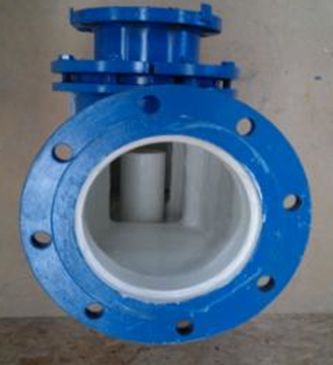
- Lined butterfly valves — body and disc protected in ceramic for shutting off and controlling abrasive flows.
- Injector valves — for dosing highly abrasive flows in pneumatic and hydraulic conveying lines.
- Rotary and curved valves — dosing and directing with the rotating surfaces protected against erosion.
- Lined splitters and distributors — together with the ceramic distributors line.
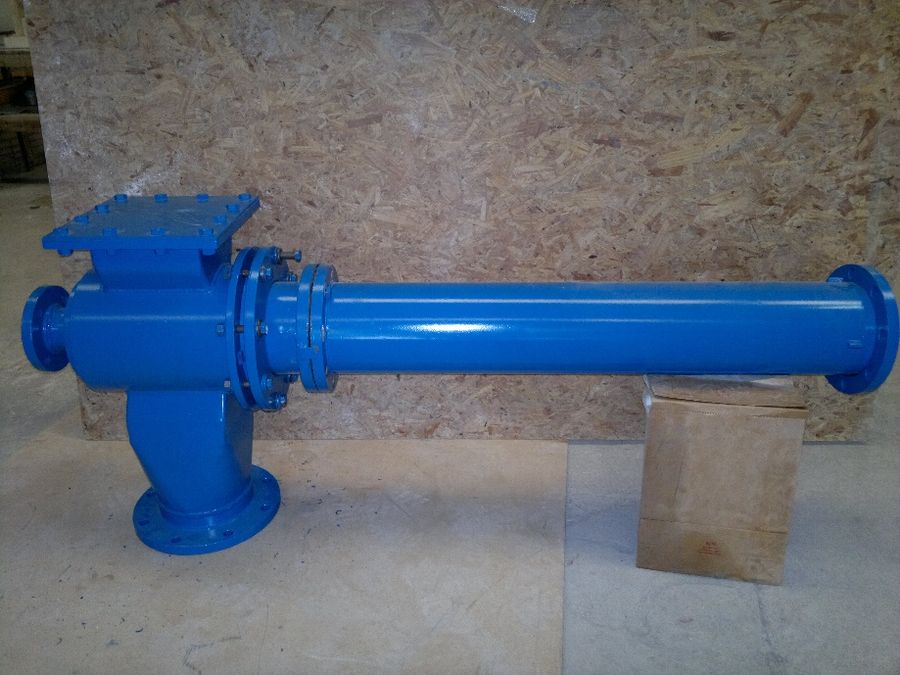
- Sizes to project — built in a range of diameters to your drawing (e.g. 14¨ inlet / 8¨ outlet).
Material: CT CEDUR alumina
Working surfaces are lined with the CT CEDUR line, sintered above 1,600 °C and virtually free of glassy phase. For pure abrasion, CT CEDUR 94HH; with impact, 96HH; with chemical attack from acids and alkalis, the high-purity 99HH — the chemical inertness of alumina also protects the valve in corrosive fluids.
Where it is applied
- Mining — slurry control and shut-off; a lined component operates in the field at Vale.
- Cement and energy — dosing raw meal, coke, pulverized coal and ash.
- Chemical and agribusiness — corrosive fluids and dosing of grain, fertilizers and feed.
How we develop your valve
- Diagnosis — analysis of the flow, the processed material and the duty (shut-off, dosing or directing).
- Engineering — geometry and ceramic formulation defined from the valve drawing or a reference part.
- Manufacturing — forming, sintering in in-house kilns and precision grinding of the sealing surfaces.
- Application — delivery, installation support and field performance follow-up.
Frequently asked questions
Which valve types can be ceramic lined?
Butterfly, injector, rotary and curved valves, plus flow splitters and distributors. The lining is applied to the surfaces in contact with the abrasive material — body, disc and seat — keeping the valve's original operation and actuation.
Does a ceramic valve keep its dosing accuracy?
Yes — that is the main advantage. Because ceramic barely erodes, the internal profile and design clearances hold throughout the service life, preserving the dosing accuracy and sealing that metal loses as it wears.
What sizes do you build?
A range of sizes, to project — for example, assemblies with a 14¨ inlet and 8¨ outlet have already been supplied. The starting point is the equipment drawing or a reference part; engineering defines geometry and formulation.