Wear in grain and fertilizer handling
In agribusiness pneumatic conveying, dry product travels at high velocity — and every change of direction becomes an erosion point. Elbows and branches are the first to wear through: the flow of grain, feed and meal attacks the same face of the metal wall every time. With fertilizers the challenge doubles: besides being abrasive, many are chemically aggressive and corrode the alloy from within.
Technical alumina solves both fronts: 9 Mohs hardness (over 1,300 HV) against abrasion and chemical inertness against aggressive fertilizers. And the low roughness of the ceramic surface cuts friction and material build-up, improving flow — a wear-resistant ceramic lining can last 10× longer than Ni-Hard at the same point.
Where ceramics are applied in agribusiness
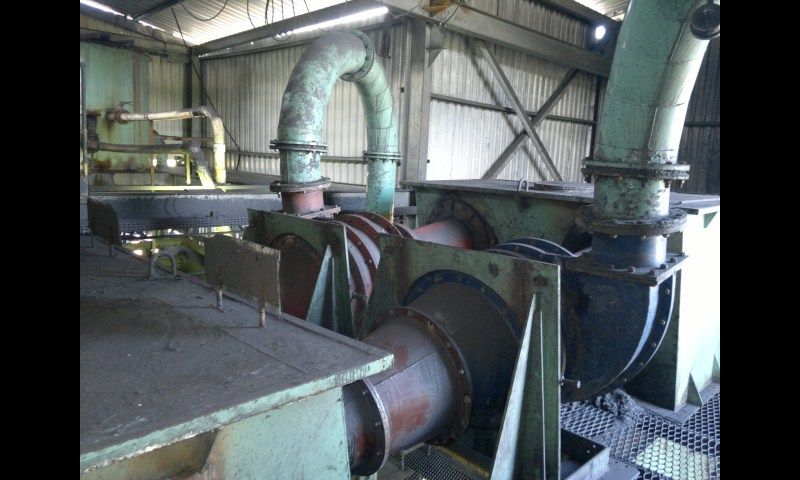
- Pneumatic conveying — elbows, T and Y branches and piping for grain, feed and meal, lined at the points of heaviest attack.
- Fertilizers — lines and components facing combined abrasion and chemical attack, protected by alumina's inertness.
- Dedusting and classification — lined cyclones for powders and fines.
- Chutes and launders — sliding and impact points, with flow improved by the low surface roughness.
Components we supply
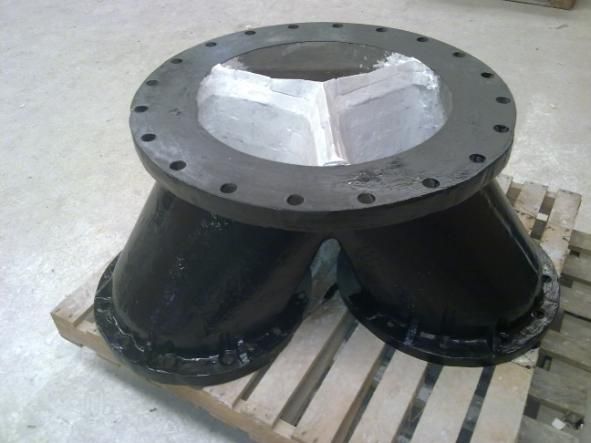
- Ceramic-lined pipes, elbows and branches — pneumatic conveying with pipe and flange in matching sizes.
- Lined cyclones — dedusting and classification of grain, powders and fines.
- Ceramic valves — dosing and directing abrasive flows.
- Custom linings — chutes, launders and any wear point of the plant.
Vale Fertilizantes is among the clients running CT CEDUR components, alongside major names in mining, cement and energy.
Material: CT CEDUR alumina
Agribusiness components use the CT CEDUR line — technical alumina sintered above 1,600 °C, virtually free of glassy phase. For the abrasive flow of grain and feed, CT CEDUR 94HH is the base; for fertilizers with chemical attack, the high-purity 99HH. Engineering defines the formulation from an analysis of your process.
FAQFrequently asked questions
Can the ceramic contaminate grain or feed?
No. Alumina is chemically inert: it does not corrode, sheds no residues and does not contaminate the processed product — unlike worn metal alloys, which release particles into the flow.
Why do metal elbows wear through so fast?
In pneumatic conveying the material travels at high velocity and always attacks the same outer face of the elbow. Ceramic, at 9 Mohs hardness with a low-roughness surface, barely wears in that regime — and CETARCH parts match the original equipment geometry, with no reduction of the flow section.
Do fertilizers corrode the ceramic lining?
Not under typical process conditions. Alumina is inert to acids and alkalis; for fertilizers with more aggressive chemistry, engineering recommends the high-purity CT CEDUR 99HH formulation.