Corrosion + abrasion: the double attack on metal
In a chemical plant, wear rarely comes alone. Acidic or alkaline fluids corrode the metal surface, and suspended solids erode the attacked layer — each mechanism accelerates the other. Valves lose calibration, bushings and seals leak, pumps and piping swap parts at every shutdown. And in sensitive processes, corroded metal also contaminates the product itself.
Technical ceramics break that cycle: alumina is chemically inert to aggressive acids, alkalis and solvents under typical process conditions, and its hardness (9 Mohs, over 1,300 HV) virtually eliminates erosion. The result is a component that does not corrode, does not contaminate and does not lose geometry — learn more in our guide on what technical ceramics are.
Where ceramics are applied in chemical plants
- Flow and pressure control — orifice plates and valves that keep the calibrated bore even in corrosive, abrasive fluid.
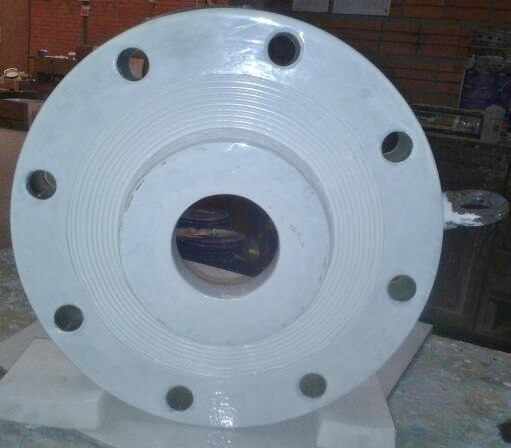
- Pumping — ceramic casings, bushings and sleeves in pumps processing aggressive fluids.
- Fluid and slurry transport — piping, elbows and branches lined at the points of chemical and abrasive attack.
- Contamination-sensitive processes — high-purity alumina components that release no metal ions into the product.
Components we supply
- Ceramic orifice plates — precise flow and pressure control, with no erosion of the calibrated bore.
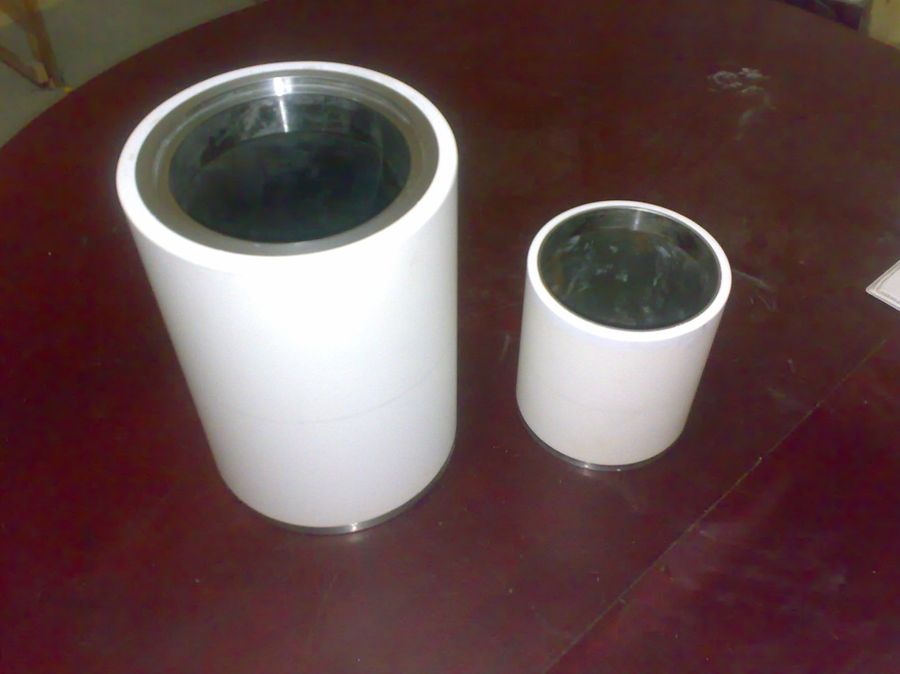
- Ceramic bushings and sleeves — friction points of pumps and shafts in contact with chemicals.
- Lined pumps — casings and components in solid ceramic for aggressive fluids.
- Custom linings — piping, tanks and any point of chemical attack plus abrasion.
Braskem is among the clients running CT CEDUR components from CETARCH.
Material: high-purity CT CEDUR alumina
For chemical duty, the reference formulation is CT CEDUR 99HH — 99.5% to 99.7% Al₂O₃, sintered above 1,600 °C virtually free of glassy phase. High purity maximizes chemical inertness and allows thin, complex parts; for abrasive fluids that are less chemically aggressive, engineering may specify 94HH or 96HH.
FAQFrequently asked questions
Do ceramics resist every chemical?
Alumina is inert to aggressive acids, alkalis and solvents under typical process conditions. For each application, CETARCH engineering evaluates the fluid, temperature and concentration and specifies the right CT CEDUR formulation — when in doubt, high-purity 99HH is the most chemically resistant.
Do ceramics contaminate the processed product?
No. Unlike corroded metal, which releases particles and ions into the fluid, high-purity alumina is chemically stable and does not contaminate the product — a decisive advantage in sensitive processes.
Is it worth replacing metal parts that corrode fast?
Yes — that is exactly where the payback is highest. Components currently replaced due to corrosion plus abrasion (orifice plates, bushings, pump internals) last multiple campaigns in ceramic, cutting shutdowns, maintenance and total cost of operation.