Wear in thermal generation
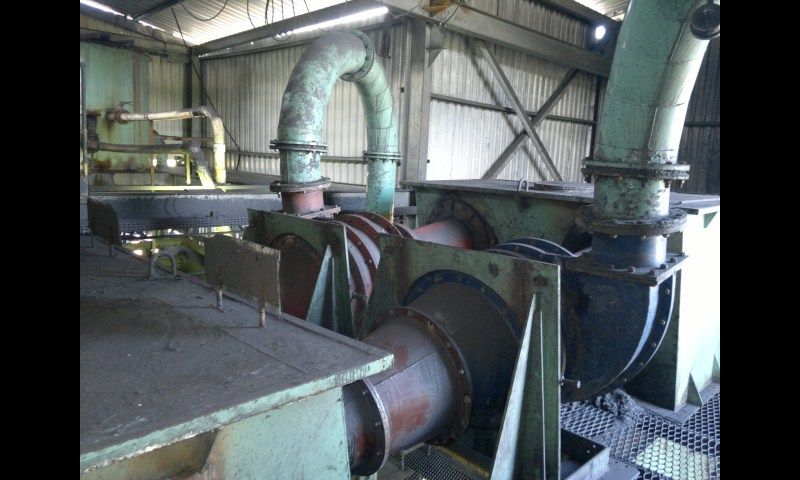
In a coal-fired power plant, the fuel is ground to powder and blown at high velocity through pneumatic conveying lines. After combustion, fly and bottom ash — hard, sharp particles — travel on through ducts, cyclones and dedusting systems. This continuous flow of abrasive particulate wears elbows, reducers and metal walls, punching through lines and forcing unplanned shutdowns.
Technical alumina resists where steel fails: at 9 Mohs and over 1,300 HV, a wear-resistant ceramic lining virtually eliminates wall erosion, keeps the flow section intact and withstands the service temperatures of the ash circuit — with no deformation or loss of integrity.
Where ceramics are applied in the plant
- Pulverized coal transport — pipes, elbows and branches of the pneumatic circuit, lined at the points of heaviest attack.
- Fly and bottom ash handling — ducts, reducers and valves protected against continuous erosion.
- Dedusting — lined cyclones and micro-cyclones for particulate separation.
- Electrostatic precipitators — ceramic insulating bases and support components at high temperature.
Components we supply
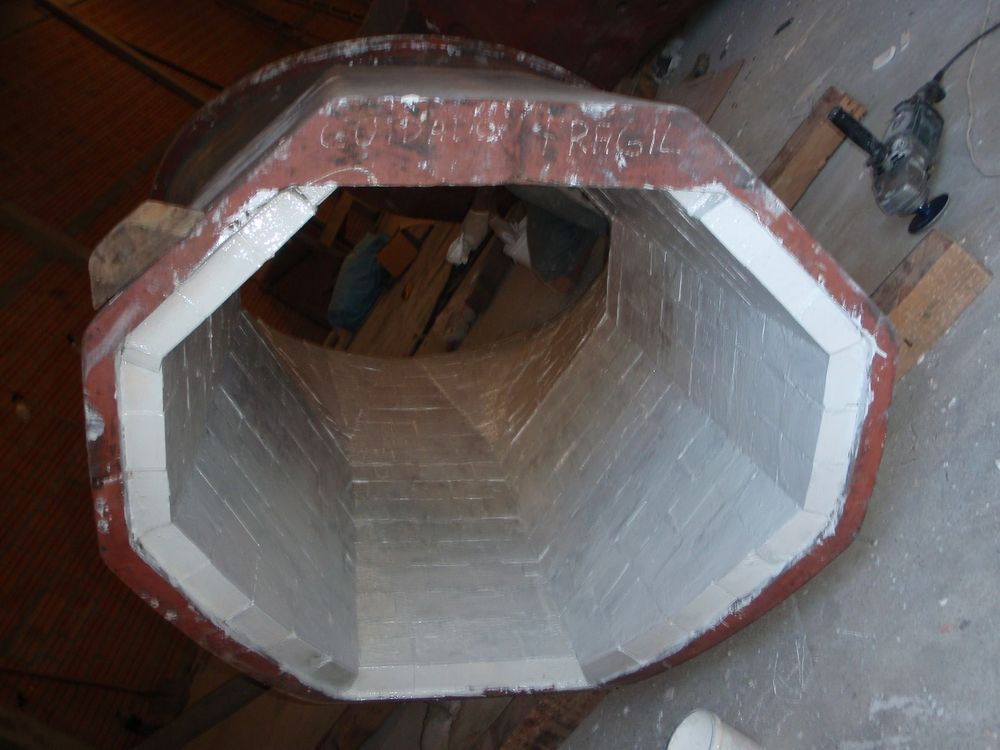
- Ceramic-lined pipes and elbows — pneumatic conveying of coal and ash, pipe and flange in matching sizes.
- Lined cyclones — dedusting and particulate separation with geometry preserved.
- Insulating bases for electrostatic precipitators — high-hardness ceramic where wear never stops.
- Custom linings — ducts, chutes, fan blades and any wear point of the plant.
Engie and thermal power plants are among the clients running CT CEDUR components from CETARCH.
Material: CT CEDUR alumina
Power-generation components use the CT CEDUR line — technical alumina sintered above 1,600 °C, virtually free of glassy phase, with thermal stability that retains mechanical properties at service temperatures. For ash and coal, the most used formulations are CT CEDUR 94HH (high abrasion) and 96HH (abrasion + impact).
FAQFrequently asked questions
Can ceramic withstand ash-circuit temperatures?
Yes. Technical alumina retains its mechanical properties at high service temperatures, with no deformation or loss of structural integrity — it is sintered above 1,600 °C, far beyond the typical conditions of an ash line.
Can the plant's existing lines be lined?
Yes. Pipes, elbows, ducts and cyclones are custom-lined from the drawing or a reference part, matching the original equipment geometry — with no reduction of the flow section and no process change.
Where does switching to ceramic pay off most?
At the points where metal wears through first: pneumatic-conveying elbows, reducers, branches and ash ducts. At those points the field benchmark is up to 10× the service life, which translates into fewer unplanned shutdowns and lower total cost of operation.