Ceramic wear plates are plates, tiles and mosaics of technical alumina applied over the metal surface of equipment exposed to abrasion — transfer chutes, silos, hoppers, conveyors and launders. The hardness of CT CEDUR alumina (9 Mohs and 1,300-1,600 HV, sintered above 1,600 °C) puts maintenance on another level: up to 10 times the service life of Ni-Hard or steel at the same wear point. Use ceramic wear plates when the same sacrificial metal plate keeps going back on the purchase list at every shutdown. Fixing is typically epoxy-bonded, bolted or weld-anchored, without modifying the equipment; for abrasion with impact, the CT CEDUR 96HH formulation and rubber-backed ceramic panels absorb the energy of the flow.
Where the abrasive flow eats the metal
Every abrasive material flow has points where the energy concentrates: the transfer-chute plate that takes the belt discharge, the hopper wall rubbed by the load, the silo bottom, the feeder launder, the bucket. At these points the sacrificial metal plate — structural steel, wear-resistant steel or Ni-Hard — wears continuously: it thins, holes through and goes back to the boiler shop at every shutdown, taking maintenance hours and plant availability with it.
The ceramic wear plate changes the logic of that maintenance. Instead of periodically replacing metal, the contact surface becomes technical alumina — a material far harder than any metal alloy — and the chronic replacement point starts lasting through entire maintenance cycles. It is the most direct way to apply a wear-resistant ceramic lining to flat, large-area surfaces.
What we supply: ceramic plate and tile formats
A ceramic wear plate is a set of technical alumina plates or tiles applied over the metal surface exposed to the flow. The steel keeps providing the structural strength; the ceramic takes over the wear. The format follows the geometry and severity of each point:
- Flat plates — larger pieces for flat, large-area surfaces, with thickness defined by the wear severity and the target service life.
- Weldable tiles — plates with a central hole or recess for stud-weld fixing, typically used where there is vibration, higher temperature or a requirement for mechanical anchoring.
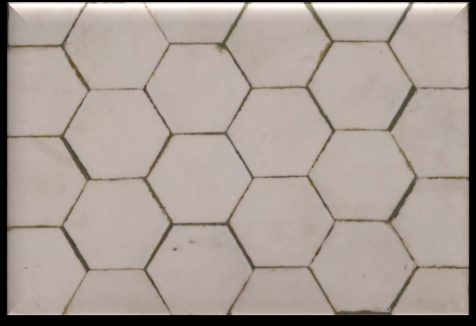
- Mosaic mats — small tiles (hexagonal or square) grouped into flexible panels that follow curved surfaces such as drums, cones and the inside of ducts.
- Rubber-backed ceramic panels — tiles embedded in a rubber base that absorbs impact while the ceramic resists abrasion; the typical combination for chutes with falling material.
- Custom parts — specific geometries developed by engineering from your drawing or a reference part, in 100% in-house manufacturing.
Where it is applied
- Mining — transfer chutes, hoppers, feeders, screens and buckets for ore and slurry.
- Cement — silos, hoppers, ducts and launders for raw meal, clinker and coke.
- Power, steel and agribusiness — pulverised coal and ash ducts, sinter launders, grain and biomass conveyors.
- Closed geometries — where the flow runs inside piping, the same alumina is applied in ceramic-lined pipes and elbows.
How the plates are fixed
The fixing method is defined together with the format, based on temperature, vibration, impact and whether the structure can be drilled or welded — generally without modifying the existing equipment. The typical industry methods:
- Epoxy adhesive bonding — the most common method for tiles and mosaics on prepared surfaces in low-temperature applications; fast installation with no holes in the structure.
- Bolted fixing — plates with a countersunk hole held by a bolt, with a ceramic plug protecting the head; allows individual replacement of pieces.
- Weld anchoring — weldable tiles fixed by a stud welded to the structure, generally combined with adhesive; recommended where vibration or temperature rules out pure bonding.
Material: CT CEDUR alumina
CETARCH plates and tiles are manufactured in the CT CEDUR line — technical alumina from 90 to 99HH, sintered above 1,600 °C, with 9 Mohs hardness and 1,300-1,600 HV Vickers. For pure sliding abrasion, the high-alumina formulations of the line; for abrasion with impact, CT CEDUR 96HH; for chemically aggressive or high-purity streams, the 99HH.
How we specify your wear plate
- Diagnosis — analysis of the wear point: conveyed material, particle size, angle and velocity of incidence, temperature and replacement history.
- Format and thickness — plate, weldable tile, mosaic mat or rubber-backed ceramic panel, with the thickness sized for the severity and the target service life.
- Formulation — CT CEDUR from 90 to 99HH according to the regime: pure abrasion, abrasion with impact (96HH) or chemical attack and high purity (99HH).
- Manufacturing and delivery — 100% custom-made parts from your drawing or a reference part, with forming and sintering in in-house kilns in Criciúma/SC, Brazil.
Frequently asked questions
How long does a ceramic wear plate last compared with a metal plate?
In sliding abrasion, the benchmark is up to 10 times the service life of Ni-Hard or steel at the same wear point. The reason is hardness: CT CEDUR alumina reaches 9 Mohs and 1,300-1,600 HV, a level no metal alloy reaches. The real gain depends on the conveyed material and the operating conditions — which is why specification starts from an analysis of the wear point.
How are ceramic plates fixed to the equipment?
The typical methods are epoxy adhesive bonding, bolted fixing and weld anchoring (weldable tiles with a stud), plus rubber-backed ceramic panels installed as a single panel. The choice depends on temperature, vibration and whether the structure can be drilled or welded — generally without modifying the existing equipment.
Can a ceramic plate take impact?
It depends on the design. For abrasion with impact there are the CT CEDUR 96HH formulation, developed for severe abrasion and impact, and rubber-backed ceramic panels, where the rubber absorbs the energy of the fall and the ceramic resists the abrasion. Extreme point impact remains metal territory — at those points, the hybrid metal structure + ceramic surface is the solution.
Do you supply specific sizes and thicknesses?
Yes — the parts are 100% custom-made. CETARCH engineering defines format, thickness and formulation from your drawing or a reference part, and manufacturing is in-house, in Criciúma/SC, Brazil, from forming to sintering above 1,600 °C.